
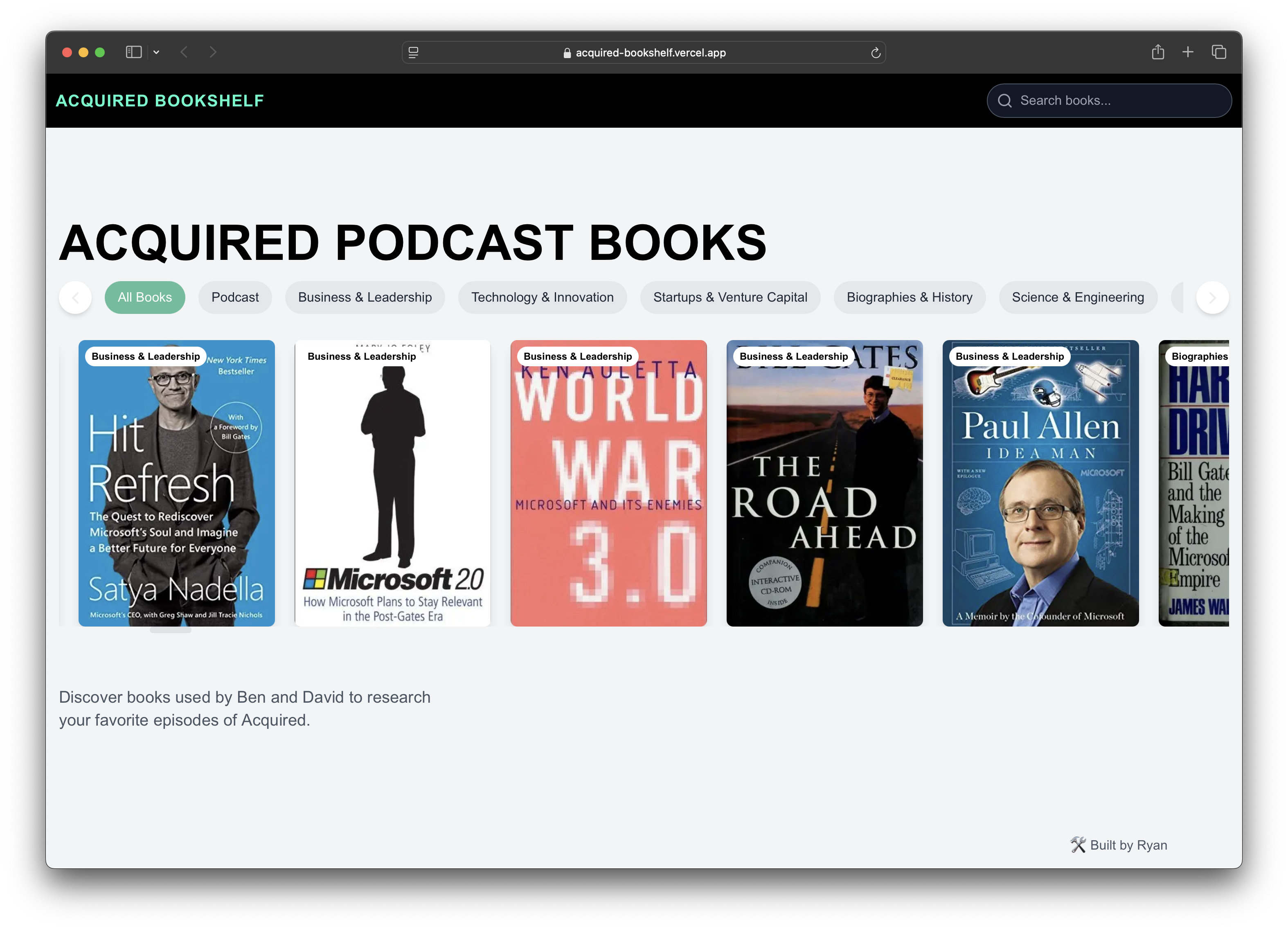
Acquired Bookshelf
AI assisted bookshelf for the Acquired podcast.
Problem Statement
The Acquired podcast, known for its deep research and comprehensive analysis of company stories, frequently references valuable books and resources throughout its episodes. However, listeners faced a significant challenge: these recommendations were scattered across hundreds of episodes, making it difficult to discover and access these learning materials efficiently. There was no central repository where listeners could explore all referenced resources, limiting the educational impact of the podcast's rich content.
My Role
As the sole developer of this project, I took complete ownership from conception to deployment. This included initial planning, technical architecture decisions, development, and ongoing maintenance. The project showcased my ability to identify community needs, leverage modern development tools, and ship valuable features efficiently.
Process Overview
The development journey began with defining the vision through v0 mocks, which helped establish the core concept and user experience. These initial mocks became the foundation for sketching out the interface and planning the technical implementation.
Working iteratively between Claude Code and Cursor, I evolved the design from an initial side-scrolling layout to a more sophisticated tile-grid system. The grid features alternating tile sizes based on book dimensions and positioning, creating a dynamic, visually engaging interface. Tailwind CSS powered the styling throughout, enabling rapid iteration on the look and feel.
Data Pipeline & Integration
- Built a streamlined data management system using JSON for content storage
- Integrated with Open Library API for comprehensive book metadata
- Implemented robust fallback mechanisms for missing or incomplete data
- Designed the system for automated content updates
Automation & Monitoring
- Deployed a fully automated pipeline on Render with scheduled cron jobs
- System automatically adds new books as podcast episodes are processed
- Built-in error handling with alerts sent to a private Discord channel for any processing issues
- Ensures the bookshelf stays current without manual intervention
Deployment
- Deployed to Vercel for reliable hosting and performance
- Implemented monitoring for API usage and system health
Technology Highlights
- Development Tools: v0 for initial mocks and concept definition
- Claude Code and Cursor for iterative development and code refinement
- Frontend: Next.js with TypeScript for type safety and improved development experience
- Styling: TailwindCSS for rapid UI development, consistent design, and tile-grid layout system
- Data Management: JSON-based content storage with static site generation for optimal performance
- API Integration: Open Library API with rate limiting and caching
- Automation: Render cron jobs for scheduled book processing
- Discord webhooks for error monitoring and alerts
- Deployment: Vercel for automated deployment and hosting
Impact
The project has demonstrated significant impact since launch:
- Attracted over 10,000 visitors in the first two months
- Created a searchable database of podcast-referenced books
- Contributed a valuable resource to the Acquired podcast community
- Successfully automated the resource discovery process for listeners
Fully Automated Operations
- The system runs completely autonomously with a cron job on Render that processes new podcast episodes and adds books automatically
- Built-in monitoring sends alerts to a private Discord channel whenever issues arise during processing
- Zero manual intervention required for ongoing maintenance and content updates
Lessons Learned
- AI-Powered Development: Strategic use of V0 for scaffolding and Cursor IDE for development significantly accelerated project delivery while maintaining code quality.
- Community Focus: Understanding and addressing specific community needs leads to higher user engagement.
- Technical Architecture: Choosing a modern, maintainable tech stack enables quick iterations and reliable performance.
- Solo Development: Effective planning and tool selection are crucial for successful solo project execution.
About this site
This site was built using code assists from Cursor, Claude, and ChatGPT and is currently hosted on Netlify. Prototypes were built using Replit, v0, Bolt, and more.